
For nine months of the year, a mail date that slips a few days is an inconvenience. In the fourth quarter, it is the whole ballgame.
A holiday catalog that lands after Thanksgiving missed the weekend it was built for. A year-end appeal that arrives in January is asking for a gift that was already given to someone else. An open enrollment packet that shows up late is a compliance problem with your name on it. The creative can be perfect, and the list can be clean — if the piece is not in homes when the audience is deciding, none of it happened.
Why Q4 Mail Dates Matter More
What makes Q4 different is that the deadlines are not yours. They belong to the audience. Shoppers make catalog decisions in a window that starts closing before Thanksgiving. Donors give on a schedule shaped by giving days and the December 31 tax deadline. Enrollment windows are fixed by regulation, not preference.
The rest of the year, a campaign that slips can simply launch later. In Q4, the moment passes and takes the budget with it — the postage, print, paper, and list spend all committed to a piece the audience never got the chance to act on. A missed mail date in April is late. A missed mail date in November is lost.
Where Q4 Schedules Actually Break
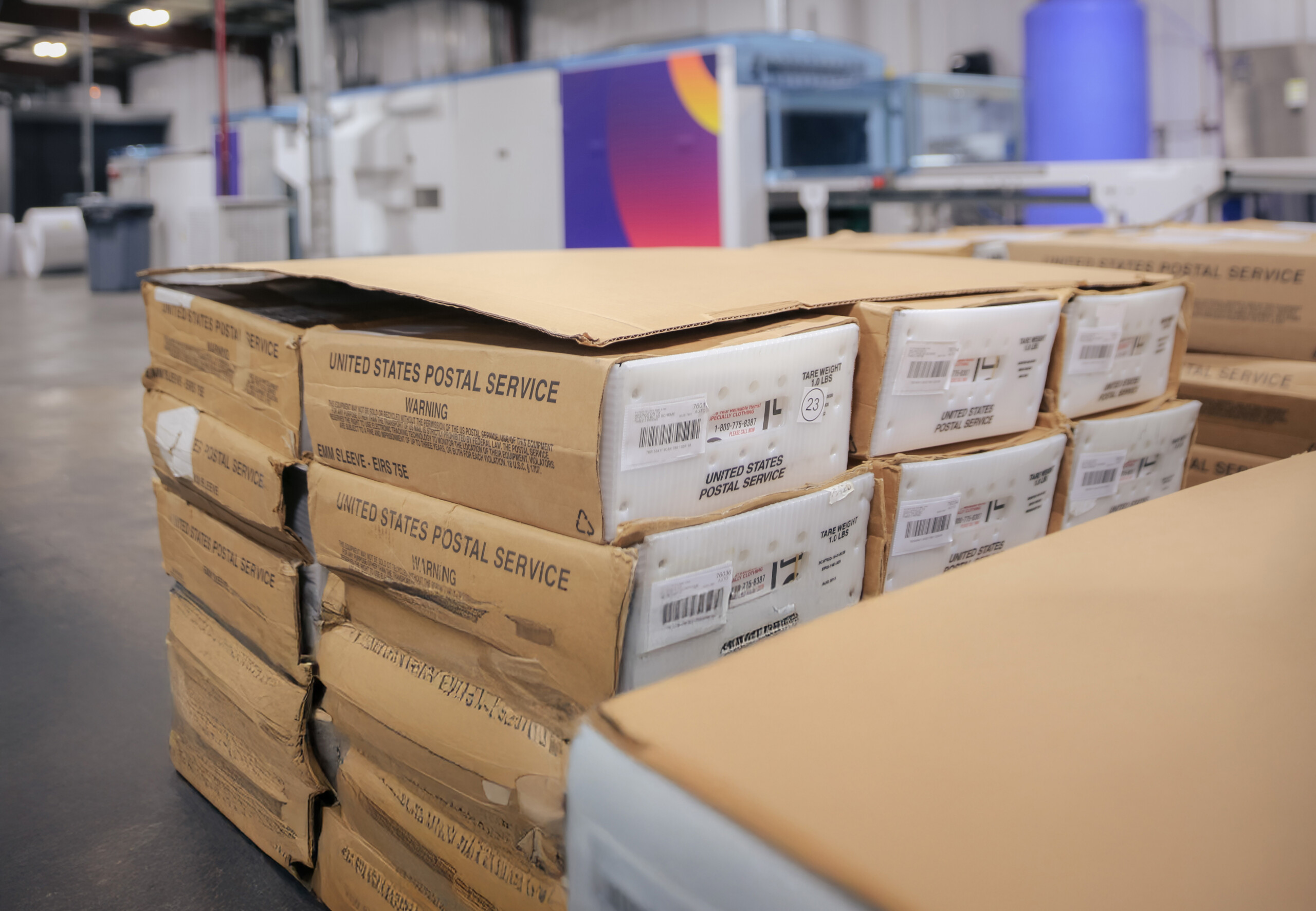
Rarely on the press. Schedules break in the seams: a data file arrives three days late, a paper order hits allocation, finishing becomes the bottleneck because every job in the building needs the stitcher the same week. Then the printed piece sits on a dock waiting for a separate mail house, which hands it to a postal network running its most congested weeks of the year.
Every handoff between vendors is a place to lose days — and Q4 is the season with the most handoffs and the fewest days to spare. And when a date does slip, your client remembers. Reliability is not an average. It is the last experience they had with you.
Building a Schedule That Holds
The campaigns that land on time in Q4 share a few habits. They start the capacity conversation in October, not November — the open enrollment packets, holiday catalogs, and year-end appeals are all being planned right now, and the printers and brokers who lock in production early are the ones not making emergency calls the week before Thanksgiving. They plan backward from the in-home date, not forward from the drop date, because the in-home window is the point. And they reduce handoffs: work that is printed, finished, and entered into the mail stream under one roof has fewer places to fail and one accountable party when a question comes up.
Then they ask their production partner one direct question before the season starts: when you commit to a mail date, what does that commitment mean? The answer tells you most of what you need to know.
Where Three Z Comes In
Three Z Printing has been in business since 1978, and we prioritize on-time mail dates.
Part of that is discipline: schedules built backward from in-home dates, and deadlines treated as commitments rather than targets. Part of it is structure: high-volume offset and digital printing, finishing, and direct mail with presort and on-site bulk mail entry all under one roof, so Q4 jobs are not riding across seams between vendors. For year-end work that carries sensitive data — statements, renewals, enrollment packets — we are also SOC 2 certified. And for printers and brokers, all of it runs white-label: your name on the job, your client relationship intact.
Three Z is taking on trade partners and year-end work for Q4 right now — but October is when that window is open, not December. If your Q4 mail matters — and in Q4, it all matters — put it with a partner that doesn’t miss mail dates. Contact us or request a quote and let’s look at your mail dates while there is still room on the calendar.